

European Oil Paintings for Private Sale: A Collector's Guide

Last Updated: November 12, 2026
Quick Summary
European oil paintings for private sale are works sold directly by a gallery or dealer to a collector, away from the public auction floor. The transaction stays confidential, the price is negotiated rather than shouted, and you usually get time to examine the piece before committing.
- Real oil paint shows visible texture and brushstrokes that leave ridges in raking light.
- A strong provenance chain of sale catalogs, gallery labels, invoices and exhibition records supports a painting's value.
- Appraisal values a work while authentication establishes what it is, and one is not a substitute for the other.
- Keep paintings off exterior walls and away from radiators, vents and fireplaces.
- Call a conservator at the first sign of flaking, lifting, blistering or a white haze under the varnish.
Table of Contents
- What Private Sale Means for European Oil Paintings
- How to Identify an Original Oil Painting
- Old Master Painting Provenance and the Paper Trail
- 17th-Century Portrait Paintings and the Dutch Golden Age
- Old Master Painting Appraisal and Fair Market Value
- Caring for European Oil Paintings in a Private Collection
- Starting a Confidential Inquiry with Old Master Gallery Inc.
- Frequently Asked Questions
What Private Sale Means for European Oil Paintings
European oil paintings for private sale are works sold directly by a gallery or dealer to a collector, away from the public auction floor. The transaction stays confidential, the price is negotiated rather than shouted, and the buyer usually gets time to examine the piece before committing.
Auction catalogs are public and your name can end up in a sales record; a private sale keeps the buyer, the price, and often the painting out of the public eye.
How to Identify an Original Oil Painting
Identifying an original oil painting starts with the surface itself: real oil paint sits on the canvas with visible texture, and brushstrokes leave ridges you can catch in raking light. A print or reproduction lies flat and shows a uniform dot pattern under magnification.
An original oil painting is a work painted by hand in oil medium on canvas, panel, or another support, with brushwork and surface texture a mechanical reproduction cannot replicate.
Our checklist before offering any piece:
- Look across the surface at a low angle for raised brushwork and impasto, or a perfectly flat film.
- Check the edges under a loupe for a dot screen, which signals a print.
- Examine the back: aged canvas, wooden stretcher bars, and old labels support authenticity.
Reading Brushwork, Canvas, and Panel
Brushwork is the closest thing to a signature. A confident hand varies pressure, leaves dry-brush passages, and builds thin glazes next to thick highlights. Hesitant, uniform strokes deserve a second look.
Support matters too. Canvas on a wooden stretcher suggests a later date than a rigid panel, and panel paintings often show warping with age.
Old Master Painting Provenance and the Paper Trail
Old Master painting provenance is the documented history of ownership, and a strong chain of paperwork does more for a painting's value than any single visual detail.
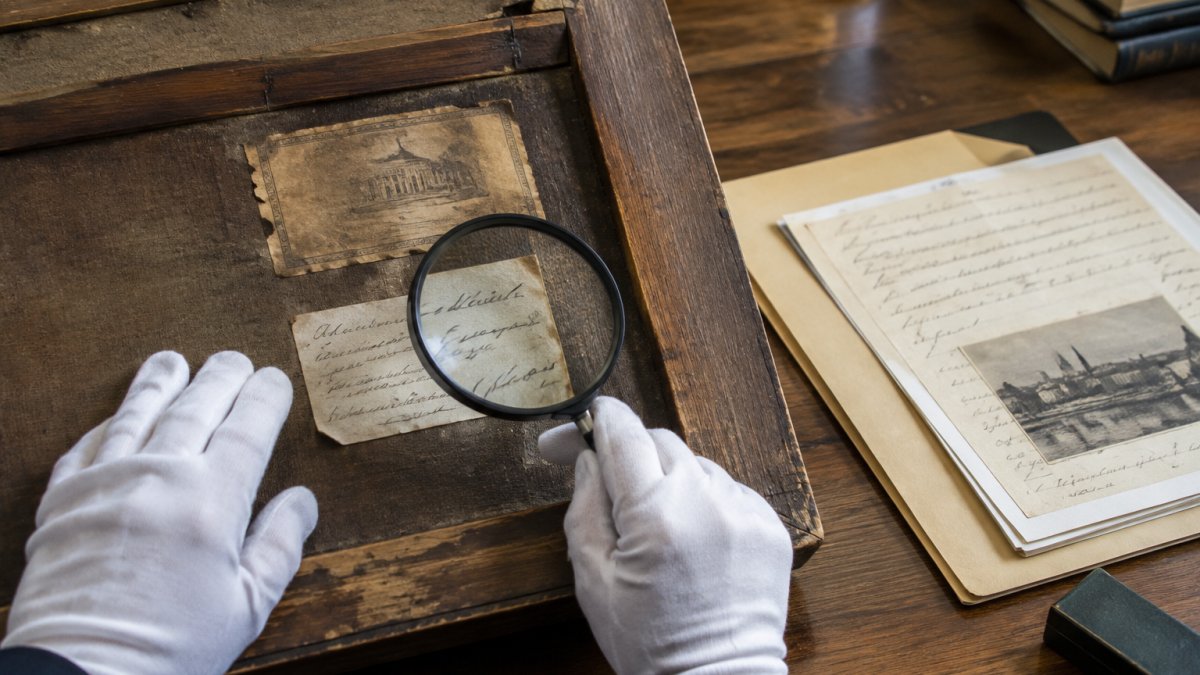
Getty Research Institute provenance research resources explains how institutions reconstruct ownership histories, and the same method applies to a private purchase.
If you want to see how dated works with documented histories look in person, our 19th century paintings collection is a good place to start.
17th-Century Portrait Paintings and the Dutch Golden Age
17th-century portrait paintings from the Dutch Golden Age reward buyers who look past the face. The period's artists painted light, cloth, and everyday life with a precision that still reads clearly today.
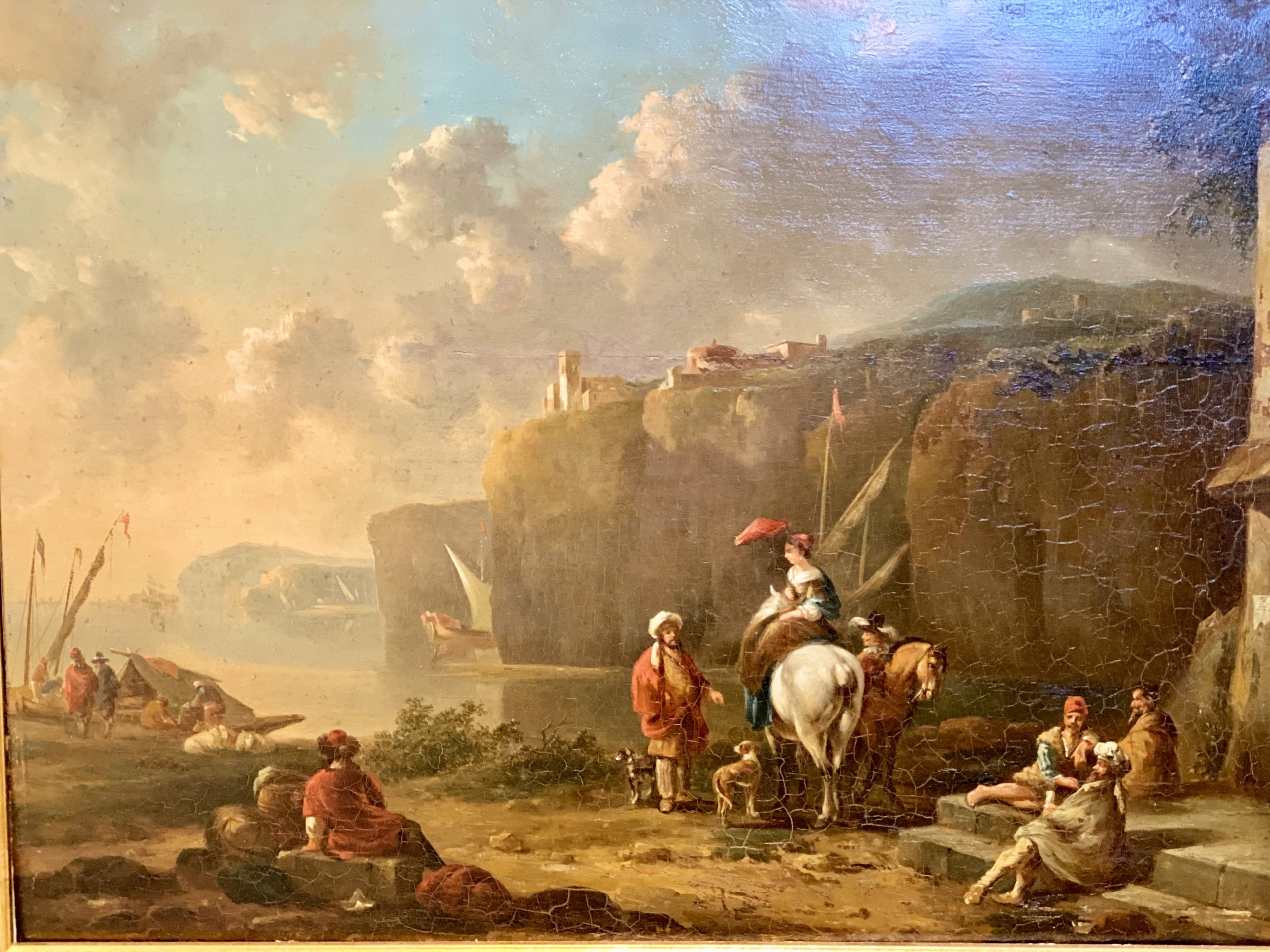
The Dutch Republic in the 1600s produced a deep bench of painters working in pastoral, genre, and figure subjects. Nicolaes Berchem, active from 1620 to 1683, built his reputation on Italianate landscapes filled with shepherds, animals, and small figures, as in his Woman on White Horse with Figures by River, painted in oil on wooden panel.
Why Berchem and Van Bergen Sit in the Same Room
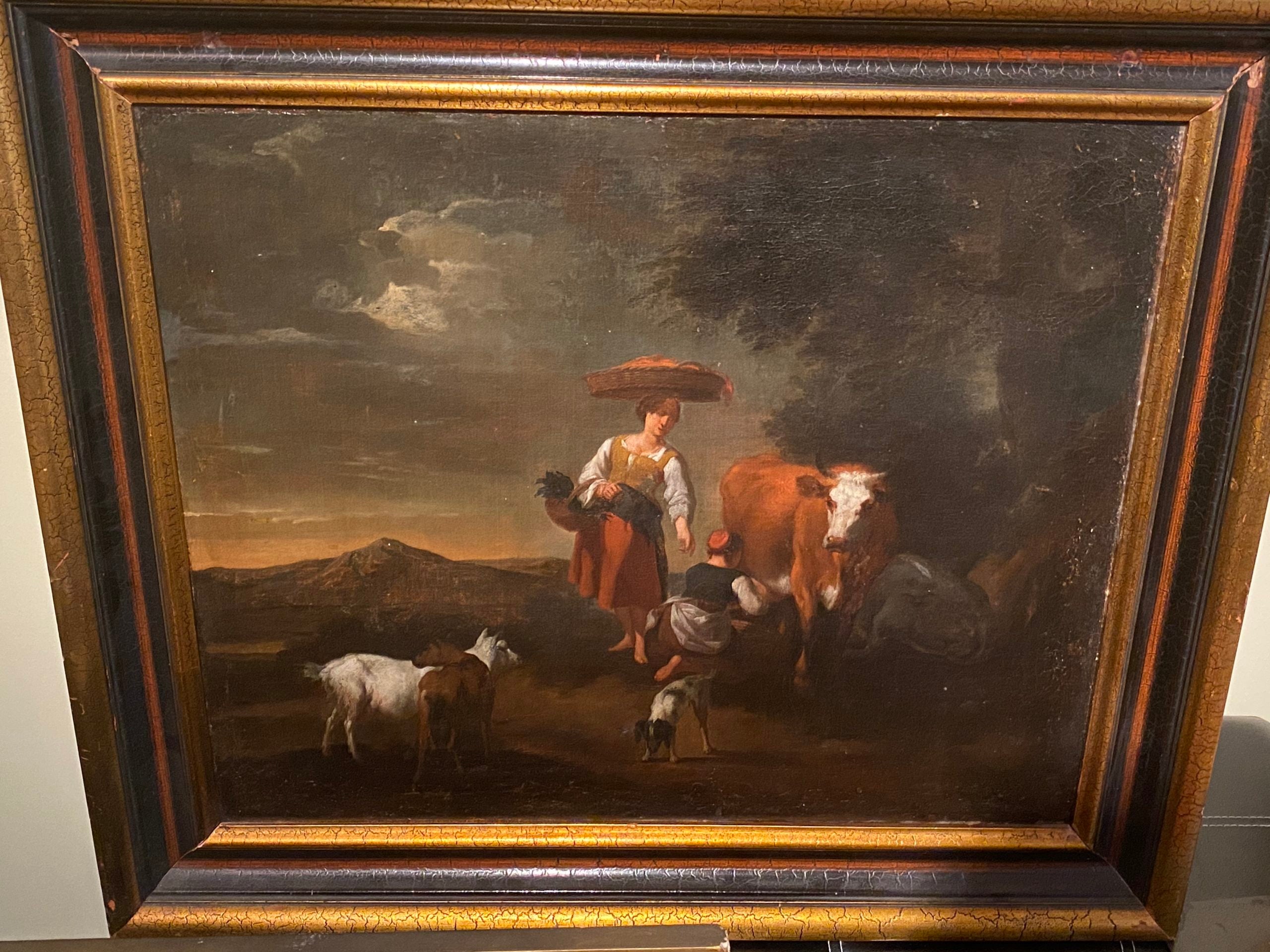
Dirk van Bergen, born in Haarlem around 1645, studied under Adriaen van de Velde and imitated Berchem so closely that his drawings were long confused with the master's.
Van Bergen's Milking Time uses the same golden tones and cattle-filled pastures on a small scale.
You can view the Berchem painting and the Van Bergen painting side by side to judge the comparison yourself.
Old Master Painting Appraisal and Fair Market Value
Old Master painting appraisal establishes what a work is worth based on attribution, condition, provenance, and comparable sales. A fair market value figure should come from someone who can defend it with evidence, not a hopeful guess.
How a Fair Market Value Figure Is Built
- Attribution and scholarly standing. The work is placed on a spectrum from firmly documented autograph work, through attributed or studio, to circle of, follower of, or after. Each step down that ladder typically removes a meaningful share of value, and the label must be stated in writing.
- Condition and restoration history. A conservator's report separates stable old repairs, which are normal, from active problems such as lifting paint, extensive overpaint, or a transferred panel. Condition adjustments are usually expressed as a percentage off the comparable base, not as a flat deduction.
- Provenance strength. A documented chain, sale catalogs, gallery labels, invoices, exhibition records, supports the price. Gaps are common and not fatal, but unexplained gaps in the last few decades invite questions.
- Comparable sales. The appraiser selects recent sales of works by the same hand, or by close contemporaries of similar subject, size, and period, and adjusts for the differences. Ask which comparables were used and why.
Reading the Comparables Like a Buyer
Comparable sales are the part of an appraisal a private buyer can most usefully interrogate. Useful comparables are works at the same attribution level, in similar condition, of similar size and subject, sold within a reasonable window.
- Same hand, same subject. A pastoral landscape by an artist is best compared with another pastoral landscape by that artist, not with a portrait.
- Same attribution tier. An attributed work should be compared with other attributed works, not with fully documented ones.
- Size matters. Small cabinet pictures and large exhibition pieces trade in different bands.
What Drives the Number
- Attribution strength. A firmly documented work commands more than one labeled circle of or after an artist.
- Condition. Restorations, warping, and losses reduce value, though stable old repairs are normal.
- Provenance. A clean, documented history supports the price.
Appraisal Versus Authentication
An appraisal values a work; authentication establishes what it is. They are separate exercises, and a private buyer should not accept one as a substitute for the other. Authentication usually relies on connoisseurship, technical imaging, pigment analysis, and scholarly consensus, and it can take months. The appraisal should state clearly whether the attribution is accepted as given or independently verified.
The Investment Angle Private Buyers Miss
Ask for the reasoning behind any appraisal, not just the figure.
A fair market value figure rests on four pillars, each of which a private buyer can question.
| Factor | What it covers | Effect on value |
|---|---|---|
| Attribution and scholarly standing | Spectrum from autograph work to after | Each step down removes a meaningful share |
| Condition and restoration history | Conservator's report on repairs and problems | Expressed as a percentage off the comparable base |
| Provenance strength | Sale catalogs, gallery labels, invoices, exhibition records | Documented chain supports the price |
| Comparable sales | Recent sales of same hand or close contemporaries | Adjusted for subject, size, and period |
Caring for European Oil Paintings in a Private Collection
Caring for European oil paintings comes down to stable conditions: steady temperature, moderate humidity, and no direct sunlight. Oil films and wooden panels expand and contract with moisture, and sudden swings do the most damage. Most private collections do fine with disciplined habits.
What Actually Damages an Oil Painting
Oil paint is a flexible film that cures over decades, but it sits on a support that moves. Canvas stretches and relaxes with humidity; wooden panels swell across the grain and warp. When the support moves faster than the paint film can follow, you get cracking, lifting, and eventually loss. Ultraviolet light accelerates varnish yellowing and fades sensitive pigments, and heat sources add a third stress, which is why a painting above a radiator or fireplace is a predictable failure point.
Practical Habits That Protect a Collection
- Keep paintings off exterior walls and away from radiators, vents, and fireplaces.
- Aim for stable indoor humidity, most practitioners target the mid-range and avoid damp basements entirely.
- Use ultraviolet-filtering glazing or hang away from windows to slow varnish yellowing.
Environmental Targets in Plain Terms
You do not need laboratory instrumentation; a simple hygrometer and thermometer will tell you more than guesswork. Aim for stability rather than a single perfect number: avoid prolonged damp, forced-air blasts, and rooms that swing between humid summers and dry heated winters. If a room cannot be stabilized, it is not the right home for an old panel.
Cleaning, Varnish, and What Not to Do
Surface dust is safe to remove with a soft brush. Anything beyond that, grime layers, yellowed varnish, old retouching, belongs to a conservator. Household cleaners, solvents, and some commercial picture-cleaning products can attack the paint film or leave residues a conservator must later remove. Owners who attempt a light clean often discover the varnish is original and integral, creating a much larger conservation problem.
Framing, Glazing, and Backing
A sound frame is part of the painting's protection. Check that the work is not pressing against glazing, that the backing is archival and dry, and that hanging hardware is rated for the weight. For panel works, a rigid backing and stable hanging position reduce warping risk. If you reframe, keep the original frame and any labels, they are part of the provenance record.
Storage and Travel
If a painting comes off the wall, store it vertically in a dry, stable room, face protected, and never lean it against a heat source. For transport, use a specialist fine-art shipper who crates the work and controls humidity; a household mover is not the right choice for an old oil. Insure the work for its appraised value before it leaves the wall.
When to Call a Conservator
Call a conservator at the first sign of flaking, lifting, blistering, or a white haze under the varnish. Keep a simple record of condition and treatments and pass it on if you sell.
Starting a Confidential Inquiry with Old Master Gallery Inc.
A confidential inquiry begins with a private conversation, not a public listing. You tell us what you are looking for, we tell you what we hold, and nothing about the exchange becomes public.
Our process is straightforward:
- Contact us with the period, subject, or budget you have in mind.
- We share details and images of suitable works from our curated selection.
- You review provenance and condition documentation at your pace.
- We arrange a private viewing, in person or remotely.
- You decide, and we handle the sale discreetly.
If you are ready to begin, sell your painting to our gallery or inquire about a purchase and we will guide you from there. You can also browse our full Old Master paintings inventory.
Old Master Gallery Inc. offers a curated selection of European paintings from the 15th to the 19th centuries.
Frequently Asked Questions
How can you tell if a European oil painting is authentic?
Start with the physical evidence: brushwork consistent with the attributed artist, age-appropriate craquelure, and a support (canvas, panel, or copper) that matches the period. Then check documentation. A signed artwork with a clear chain of ownership, gallery labels, and a certificate of authenticity carries far more weight than attribution alone. For works described as "attributed to" or "circle of," ask what the attribution is based on. Independent examination by a qualified conservator or appraiser adds a layer of confidence before you commit.
What should you look for when buying an Old Master painting?
Look at four things: condition, provenance, attribution strength, and price relative to comparable sales. Condition covers past restorations, warping, and paint loss. Provenance is the documented ownership history. Attribution strength matters because a firmly documented work by a named artist is valued differently from one in the artist's circle. Finally, compare the asking price against auction records for similar works. Ask the seller for condition reports, restoration records, and any appraisal documentation before you decide.
How do you get an Old Master painting appraised?
An Old Master painting appraisal should be done by a qualified appraiser with experience in European fine art, ideally one familiar with the period and school. Provide the painting's dimensions, medium, support, signature details, and any provenance documents. A proper appraisal considers comparable auction results, condition, attribution, and current art market demand. For insurance or estate purposes, ask for a written appraisal that states the valuation method. Sellers and estate lawyers handling a collection should request this before listing privately.
What documents should accompany a privately sold painting?
A private sale should include a bill of sale identifying the work, a certificate of authenticity or attribution statement, the provenance history where known, and any condition or restoration reports. Photographs of signatures, labels, and the verso help. If an appraisal exists, include it. Keep the paperwork with the painting; it becomes part of the provenance for the next owner and supports future resale or insurance claims.
What condition issues should you check before buying an antique painting?
Check for craquelure that is lifting rather than stable, areas of overpainting or retouching, warped or split panels, and canvas that has been relined. Ask whether the work has been varnished recently, since yellowed varnish hides detail. For panel paintings, note any signs of woodworm or separation. A conservator's report is worth requesting on any work above a few thousand dollars, and it protects both the buyer and the seller in a private sale.
